
Everything you need to know
What is a dental bridge?
Types of dental bridges
This section gives a short overview of common bridge types so you can discuss options at your visit.
Traditional fixed bridge
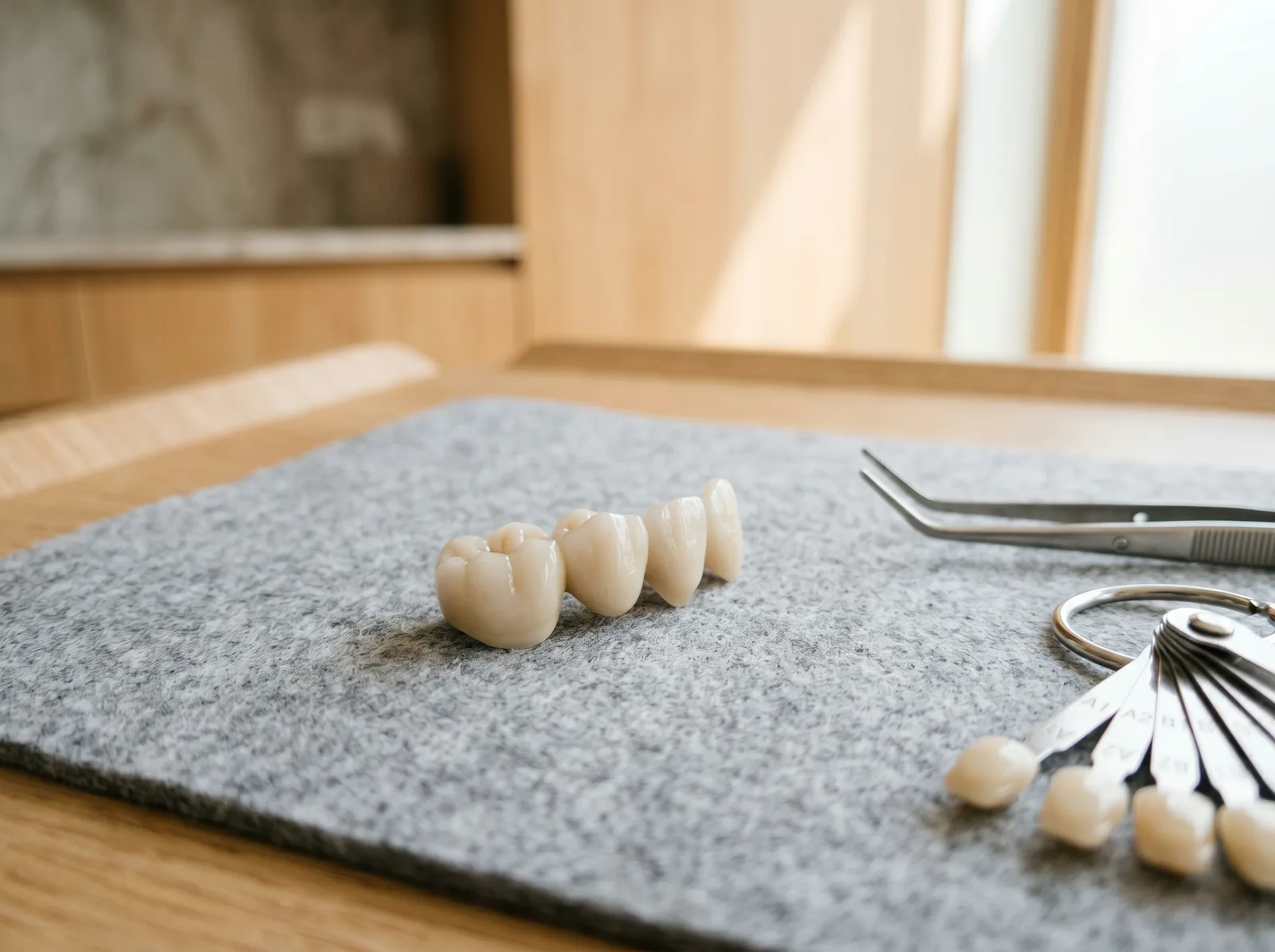
A traditional bridge uses crowns on the two teeth next to the gap. It is a common choice when those teeth need crowns or are strong enough to support the bridge.
Maryland (resin-bonded) bridge
A Maryland bridge uses a metal or porcelain framework bonded to the back of the adjacent teeth. It requires less removal of tooth structure and can be an option when the supporting teeth are healthy.
Cantilever bridge
A cantilever bridge is used when only one side of the missing tooth has a good abutment tooth. It is less common but useful in certain positions of the mouth.
Implant-supported bridge
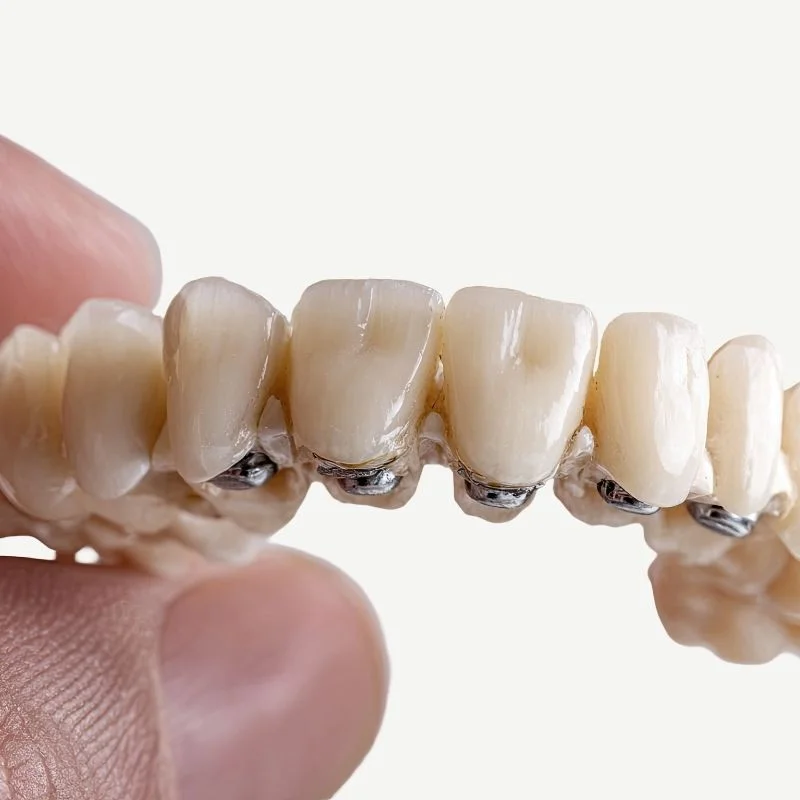
An implant-supported bridge is attached to dental implants rather than natural teeth. This is a good option when many teeth are missing or when you want to avoid placing crowns on healthy adjacent teeth. Implant options require surgery and a bone check.
Your dentist will review which type fits your mouth, health, and goals.
Are you a candidate for a dental bridge?
You may be a candidate if you:
- Have one or more missing teeth
- Have strong teeth next to the gap to support the bridge
- Have healthy gums and enough bone around the supporting teeth
If supporting teeth are weak or missing, an implant-supported bridge may be a better option. We will take X-rays and examine your mouth to determine the best plan. If a case needs specialist care, we will explain the referral and help arrange it. Our dentists provide restorative care within general dentistry and will refer when needed.
What to expect during the bridge process
Getting a bridge usually takes two or more visits.
Consultation and exam
We review your medical history and take X-rays. We discuss the best bridge type and material for you.
Tooth preparation
The abutment teeth are shaped to fit crowns. Local anaesthetic is used to keep you comfortable.
Impressions and temporary bridge
We take impressions and fit a temporary bridge to protect the teeth while the lab makes your final bridge.
Final placement
When the lab completes the bridge, we check fit, colour, and bite. We then cement the bridge in place.
Follow-up
We schedule visits to check fit and comfort. Any small adjustments are made to ensure a good bite.
Cost of dental bridges in London, ON
Bridge cost varies by type, material, and number of units. As a general guide:
- A traditional 3-unit bridge often ranges from around $1,500 to $4,000 .
- Maryland or cantilever bridges may be at the lower end of that range.
- Implant-supported bridges are typically more expensive because they include the cost of implants and surgery.
Factors that affect cost:
- Number of teeth involved
- Material (porcelain, zirconia, metal-ceramic)
- Need for root canal or other preparatory work
- Lab fees and custom work
We do not give a final price until we examine your mouth. During your consultation we provide a written estimate and explain what is included and any possible extra fees.
Direct billing & CDCP. We bill most insurance providers directly and participate in the Canada Dental Care Plan. Ask us for a written estimate before treatment begins — no surprises.
Care and longevity
- Brush twice daily with a soft toothbrush
- Floss around the bridge and use floss threaders or interdental brushes to clean under the pontic
- Visit us for regular checkups and professional cleaning Avoid very hard or sticky foods that can loosen crowns
Signs to call us include pain, looseness, or a change in bite. Regular care helps identify problems early and extend the life of your bridge.
How a bridge compares to other options
A bridge is a fixed, fast way to replace missing teeth when good abutment teeth are available. It is less invasive than implants when surgery is a concern. Implant-supported bridges do not rely on adjacent teeth and can be a longer-term solution, but they require adequate bone and surgery. A partial denture is removable and may be a lower-cost option. We will compare options and help you choose the best one for your needs.
Why choose Fairmont Dental Centre for dental bridges?
Choosing a dental office that offers clear planning and follow up helps ensure a smooth treatment.
- Location: 613 Hamilton Road, London, ON N5Z 1S8. Hamilton Road connects easily to Highbury Avenue and is reachable from central London.
- Experience: Over 35 years serving the London community.
- Hours: Evening and Saturday appointments available. Same-day consultations are offered when possible.
- Billing: Direct billing to insurance providers when available.
- Payments: We accept Visa, Mastercard, debit, and cash.
We aim to explain each step and give a written plan so you know what to expect.
Meet Our Dentists
Fairmont Dental Centre is led by Dr. Edward Pham and Dr. Alain David , experienced general dentists serving London, Ontario. They provide restorative and cosmetic care within the scope of general dentistry.
Both dentists focus on careful diagnosis, clear treatment planning, and patient comfort. If your case requires specialist prosthodontic or surgical care, we will explain why and arrange a referral to a trusted local specialist. Our clinic has served families in London for over 35 years.
What life with a new dental bridge feels like
Most patients adapt to a new dental bridge quickly. For the first few days the abutment teeth (the teeth on either side of the gap) may feel slightly sensitive to hot and cold, and the bite can feel a little different as your jaw adjusts to the new chewing surface. This usually settles within one to two weeks. If a high spot lingers or chewing still feels uneven after a few days, call us at (519) 451-4490 and we will book a short adjustment visit at no extra cost.
Speech can also feel different for the first few days, especially if the bridge is at the front of your mouth. Reading aloud at home for ten or fifteen minutes a day is the fastest way to re-train your tongue and lips around the new tooth contours. Once your bridge has fully settled, you should be able to eat, smile, and speak the way you did before the tooth was lost, often with noticeably better comfort and confidence than you had with the gap.
Cleaning under and around a bridge
The single biggest factor in how long a bridge lasts is daily cleaning under the pontic (the false tooth that bridges the gap). Regular floss cannot pass between the bridge and the gum, so we will show you how to use one of the following tools at your fitting appointment:
- Floss threaders: a small plastic loop that pulls floss under the pontic so you can clean against each abutment tooth
- Super floss: a pre-cut floss with a stiff end and a spongy middle, designed specifically for bridges and implants
- Interdental brushes: small bottle-brush style picks that fit through the space under the pontic
- Water flossers: a steady pulse of water that flushes plaque from areas a brush cannot reach
Aim to clean under the bridge once a day, ideally before bed. Combined with brushing twice daily and a professional cleaning every six months, this routine helps protect the abutment teeth from decay and gum disease, which are the two most common reasons a bridge eventually needs to be replaced.