
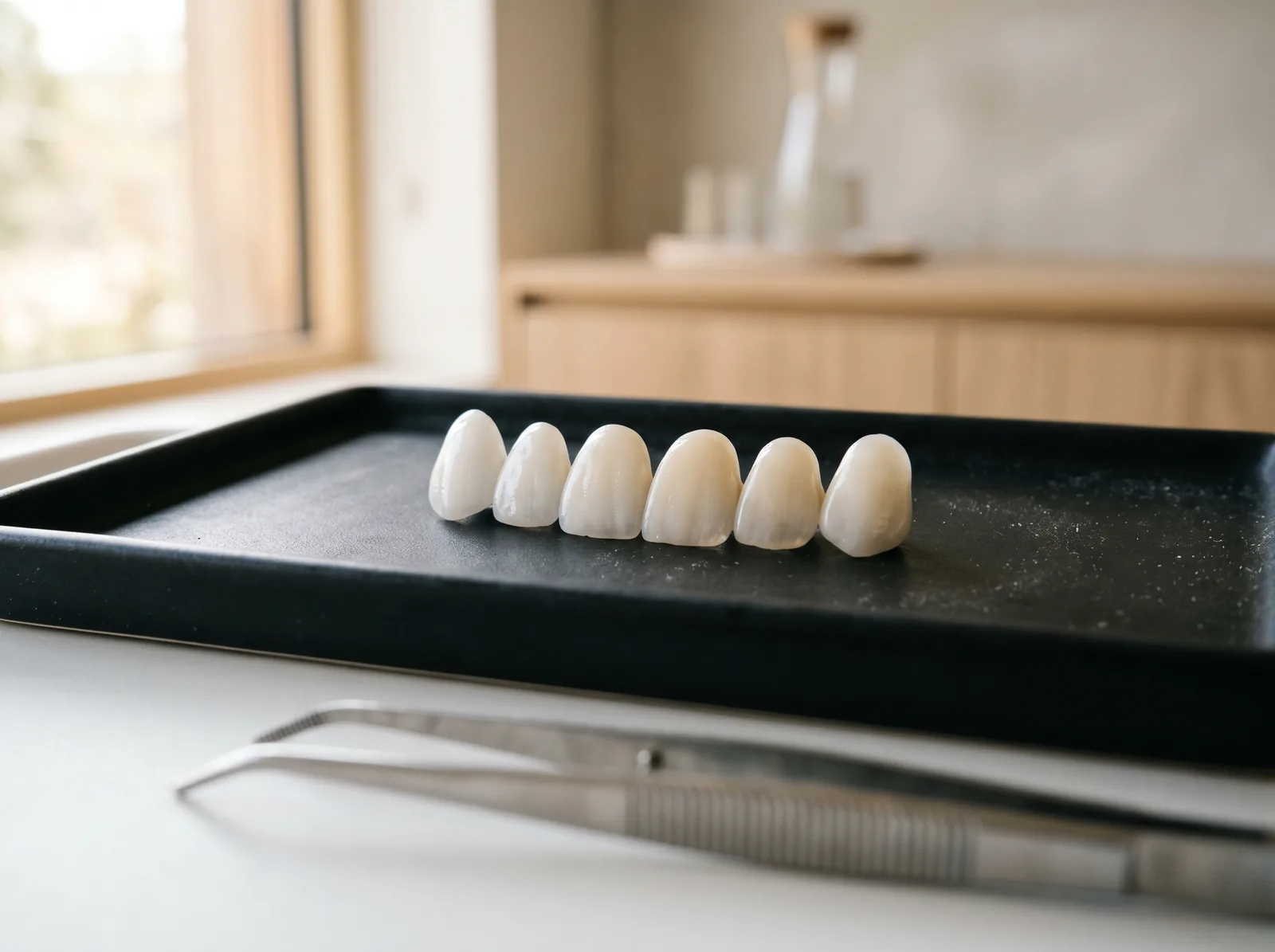
Everything you need to know
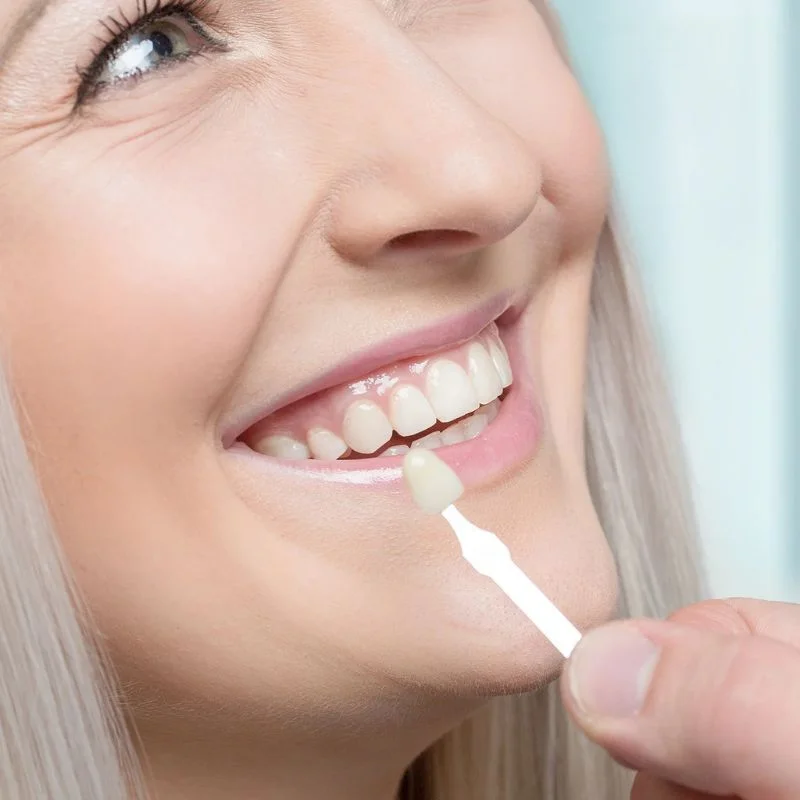
What Are Dental Veneers?
Veneers can:
- Improve tooth colour
- Close small gaps
- Repair chips and cracks
- Create a more even smile
- Adjust the shape or length of teeth
Veneers focus on cosmetic improvement. They are custom-made to match your natural teeth and facial features.
Types of Dental Veneers
There are two main types of veneers.
Porcelain Veneers
Porcelain veneers are created in a dental laboratory. They are strong, stain-resistant, and designed to look natural. Porcelain reflects light in a way that closely matches natural enamel.
Porcelain veneers usually require two visits. They are often chosen for long-term cosmetic improvements.
Composite Veneers
Composite veneers are made from tooth-coloured resin. They are shaped directly on the tooth during your visit. This option can often be completed in one appointment.
Composite veneers are usually less expensive than porcelain, but they may not last as long and can stain over time.
Your dentist will explain which option fits your goals, budget, and oral health.
Are You a Candidate for Veneers?
- Healthy gums
- Teeth free from major decay
- Cosmetic concerns such as stains or chips Realistic expectations about results
Veneers may not be suitable if you grind your teeth heavily, have untreated gum disease, or need significant orthodontic correction. In some cases, other treatments may be recommended first.
A consultation helps determine whether veneers are right for you.
What to Expect During the Veneer Process
The veneer process is planned carefully to ensure proper fit and appearance.
Consultation
We examine your teeth and discuss your goals. Photos or digital scans may be taken. We review shade and shape preferences.
Tooth Preparation
A small amount of enamel is removed from the front of the tooth to make space for the veneer. Local anesthesia may be used to keep you comfortable.
Impressions or Digital Scan
An impression or digital scan is taken to design the veneer. For porcelain veneers, the design is sent to a dental lab.
Temporary Veneers
If porcelain veneers are being made, temporary veneers may be placed while you wait for the final ones.
Final Placement
When the veneers are ready, we check the fit and colour. Once approved, they are bonded to your teeth using dental adhesive.
Same-Day Veneer Options
Some cosmetic treatments can be completed in a single appointment using composite materials or digital systems. However, not all veneer cases are suitable for same-day treatment.
Lab-created porcelain veneers may require more time to achieve the desired shape and finish. During your consultation, we will explain available options and expected timelines.
Cost of Dental Veneers in London, ON
The cost of veneers varies depending on the material used and the number of teeth treated.
In Ontario, porcelain veneers often range from approximately $1,000 to $1,700 per tooth . Composite veneers are typically less expensive than porcelain. The final cost depends on:
- The type of veneer
- The number of teeth involved
- Laboratory fees
- Tooth preparation required
- Any additional treatments needed
At your consultation, we provide a written estimate and explain what is included.
We accept Visa, Mastercard, debit, and cash. Direct billing is available when your insurance plan allows it.
Direct billing & CDCP. We bill most insurance providers directly and participate in the Canada Dental Care Plan. Ask us for a written estimate before treatment begins — no surprises.
How Long Do Veneers Last?
Porcelain veneers often last 10 to 15 years or longer with proper care. Composite veneers may need maintenance or replacement sooner.
Longevity depends on:
- Oral hygiene
- Bite forces
- Avoiding hard objects
- Regular dental visits
Veneers are durable, but they are not permanent. Regular checkups help monitor their condition.
Caring for Your Veneers
Taking care of veneers is similar to caring for natural teeth.
- Brush twice daily with fluoride toothpaste
- Floss daily
- Avoid biting hard objects such as ice
- Limit foods and drinks that stain
- Visit the dentist regularly
If you grind your teeth at night, a night guard may be recommended to protect your veneers.
Safety and Licensed Care
Cosmetic dental procedures should always be performed by licensed dental professionals . Social media advertisements may promote low-cost veneer treatments that are not regulated.
Choosing a licensed dentist ensures proper diagnosis, sterile conditions, and safe bonding techniques. If you have questions about credentials or procedures, we are happy to discuss them during your consultation.
Why Choose Fairmont Dental Centre for Veneers?
Our location at 613 Hamilton Road makes us accessible for patients across London. We are conveniently reached from downtown via Dundas Street or Hamilton Road, and from east London via Highbury Avenue.
Patients choose Fairmont Dental Centre because we offer:
- Over 35 years serving the London community
- Evening appointments
- Saturday appointments
- Same-day consultations when available
- Clear treatment plans and written estimates
- Direct billing to insurance providers when available
We aim to provide steady, professional care in a comfortable environment.
Meet Our Dentists
Fairmont Dental Centre is led by Dr. Edward Pham and Dr. Alain David , experienced general dentists serving London, Ontario.
They provide cosmetic and restorative treatments, including veneers, within the scope of general dentistry. They focus on careful planning, clear communication, and patient comfort.
If a case requires specialized care beyond general dentistry, we will explain referral options and help coordinate treatment. Our clinic has proudly supported the London community for more than 35 years.
Porcelain veneers vs composite veneers: how to choose
Both porcelain and composite veneers can improve the colour, shape, and alignment of front teeth, but they suit different goals, budgets, and timelines. During your consultation in London, we walk through the trade-offs in plain language so you can make an informed choice.
- Appearance: Porcelain reflects light in a way that closely resembles natural enamel, which is often appealing for highly visible front teeth. Composite veneers can look natural too, especially for smaller corrections, but may not match porcelain’s translucency in every case.
- Durability: Porcelain veneers typically last 10 to 15 years or longer with proper care. Composite veneers usually need touch-ups or replacement sooner, often in the 5 to 7 year range.
- Stain resistance: Porcelain resists staining from coffee, tea, and red wine. Composite resin can pick up stains over time, especially along the edges.
- Timeline: Composite veneers are often completed in a single visit. Porcelain veneers usually require two visits while the lab fabricates the final restorations.
- Cost: Composite veneers are usually less expensive per tooth. Porcelain veneers are a larger upfront investment but often work out comparable over time when you factor in lifespan.
- Tooth preparation: Both options usually require some enamel reshaping. The amount removed depends on the case and is reviewed with you before treatment begins.
If you are unsure which material suits you, we can start with a diagnostic mock-up: temporary composite shaped directly on your teeth, so you can see and feel the proposed shape before committing to porcelain. This step is especially helpful for larger smile changes covering six to ten teeth.
Veneer costs, insurance, and CDCP coverage in 2026
In London, Ontario, porcelain veneers typically run about $1,000 to $1,700 per tooth in 2026, in line with the current Ontario Dental Association Suggested Fee Guide. Composite veneers usually cost less per tooth because they are shaped chairside rather than fabricated in a lab. Your final estimate depends on:
- The material chosen (porcelain or composite resin)
- The number of teeth being treated. Many cases involve four, six, eight, or ten veneers to keep the smile balanced
- The amount of tooth preparation required
- Lab fees and custom shade-matching for porcelain
- Any treatment needed first, such as whitening on lower teeth so the new veneer shade harmonises with the rest of your smile
Veneers are generally considered a cosmetic procedure, so most private dental insurance plans do not cover them. The Canadian Dental Care Plan (CDCP) also does not typically cover purely cosmetic services, though Fairmont Dental Centre is a participating CDCP provider for restorative care that does qualify. We provide a written estimate before treatment begins, and accept Visa, Mastercard, debit, and cash. If you would like to spread the investment across more than one appointment, we can stage the work (for example, treating the upper front teeth first and the second set at a later visit) so it fits your budget.
Living with veneers: aftercare and what to expect
For the first few days after porcelain veneers are bonded, your teeth may feel slightly sensitive to hot and cold, and the bite can take a short adjustment period. Most patients return to normal eating and speaking within a week. Composite veneers usually involve even less adjustment because no temporary phase is required.
To help your veneers last as long as possible, we suggest the following daily and long-term care:
- Brush twice daily with a soft-bristled toothbrush and a non-abrasive fluoride toothpaste
- Floss daily to keep the gum line healthy where the veneer meets the tooth
- Avoid biting hard objects like ice, pens, fingernails, or popcorn kernels. These are common causes of chipped veneers
- Use a custom night guard if you grind or clench your teeth at night. Grinding is a common reason veneers fracture
- Limit foods and drinks that stain (coffee, tea, red wine, curry, and tobacco), especially with composite veneers
- Visit our London office every six months so we can polish the veneers, check the margins, and address any small chips before they grow
Veneers are designed for cosmetic improvement, not heavy chewing forces. Used as intended, they hold up well; misused, they can chip or debond. If a veneer ever feels loose, sharp, or different than usual, call us at (519) 451-4490 right away. A small repair or rebond completed quickly is almost always simpler and less expensive than waiting until the issue grows.
When veneers may not be the right choice
Veneers are a strong cosmetic option, but they are not for everyone. We will discuss alternative treatments if any of the following apply to your case:
- Heavy grinding or clenching without a willingness to wear a night guard. Crowns or orthodontic options may be more appropriate
- Active gum disease or untreated decay. These conditions need to be resolved first
- Significant crowding, gaps, or bite issues. Invisalign or other orthodontic treatment may give a healthier long-term result, with or without veneers afterward
- Very thin or worn enamel. Some teeth do not have enough surface to bond a veneer reliably
- Expectations that do not match what veneers can deliver. We share photos of similar cases so you have a realistic view of likely results before you commit
Our role is to recommend the treatment that fits your mouth and your goals, even when that means suggesting a simpler option than veneers, or no cosmetic treatment at all. If veneers are right for you, we will explain every step, share the written estimate, and answer every question before any tooth preparation begins.